
Yarn Production: A Fine Art
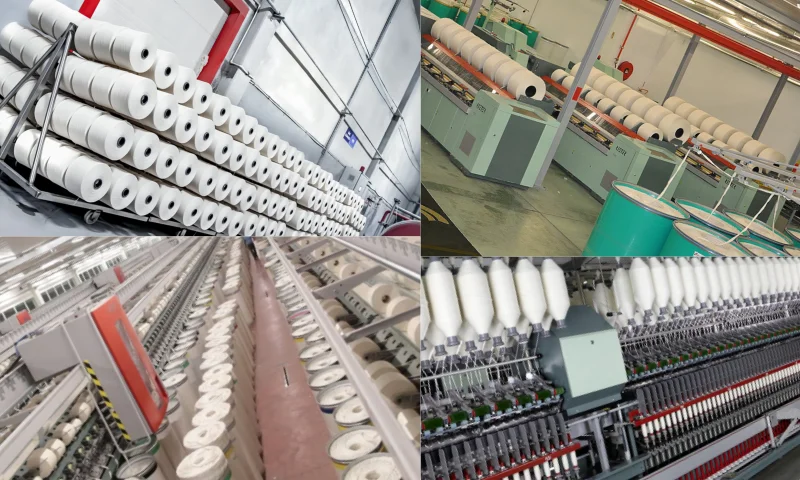
Yarn is one of the oldest textile products in human history and is still widely used today. Yarn production is a complex process and goes through various stages. In order to get information on this subject and ask the questions you are curious about, you can look at the relevant online companies on the internet pages and examine them in detail from here.
Raw Material Selection
The first step in yarn production is the selection of the appropriate raw material. Cotton, wool, silk, and synthetic fibers are the most commonly used raw materials. The quality of the raw material determines the quality of the final product. For cotton yarns, the fibers of the cotton plant are used, while for woolen yarns, the wool of sheep and other animals is preferred. Raw materials are mixed and blended to achieve the desired properties. At this stage, color, durability, and texture are determined. For example, by mixing cotton fibers of different colors, multi-colored yarns can be obtained.
Yarn Production
After the blend is prepared, the yarn production stage begins. In this stage, the fibers of the raw material are extracted, stretched, and turned into thin yarns. This process is carried out using a spinning machine. At the end of yarn production, quality control is carried out by workers specialized in yarns, and it is checked whether it meets the desired quality standards. Yarn production can be carried out in many different ways, from traditional methods to high-tech automation. Today, computer-controlled machines are frequently used to speed up the production process and improve quality. As a result, yarn production is an art with a historical background but constantly evolving. With advances in the textile industry, our ability to produce more durable, colorful, and varied yarns has increased. Yarn production plays a vital role in many areas such as clothing, home textiles, and industrial uses, and this process has become a sector that constantly seeks innovative solutions to increase the quality and diversity of textile products.